
The Power of Play: KCFI’s LearnCon Equips Educators with Play-Based Multimedia Strategies
By Rebelyn S. Beyong
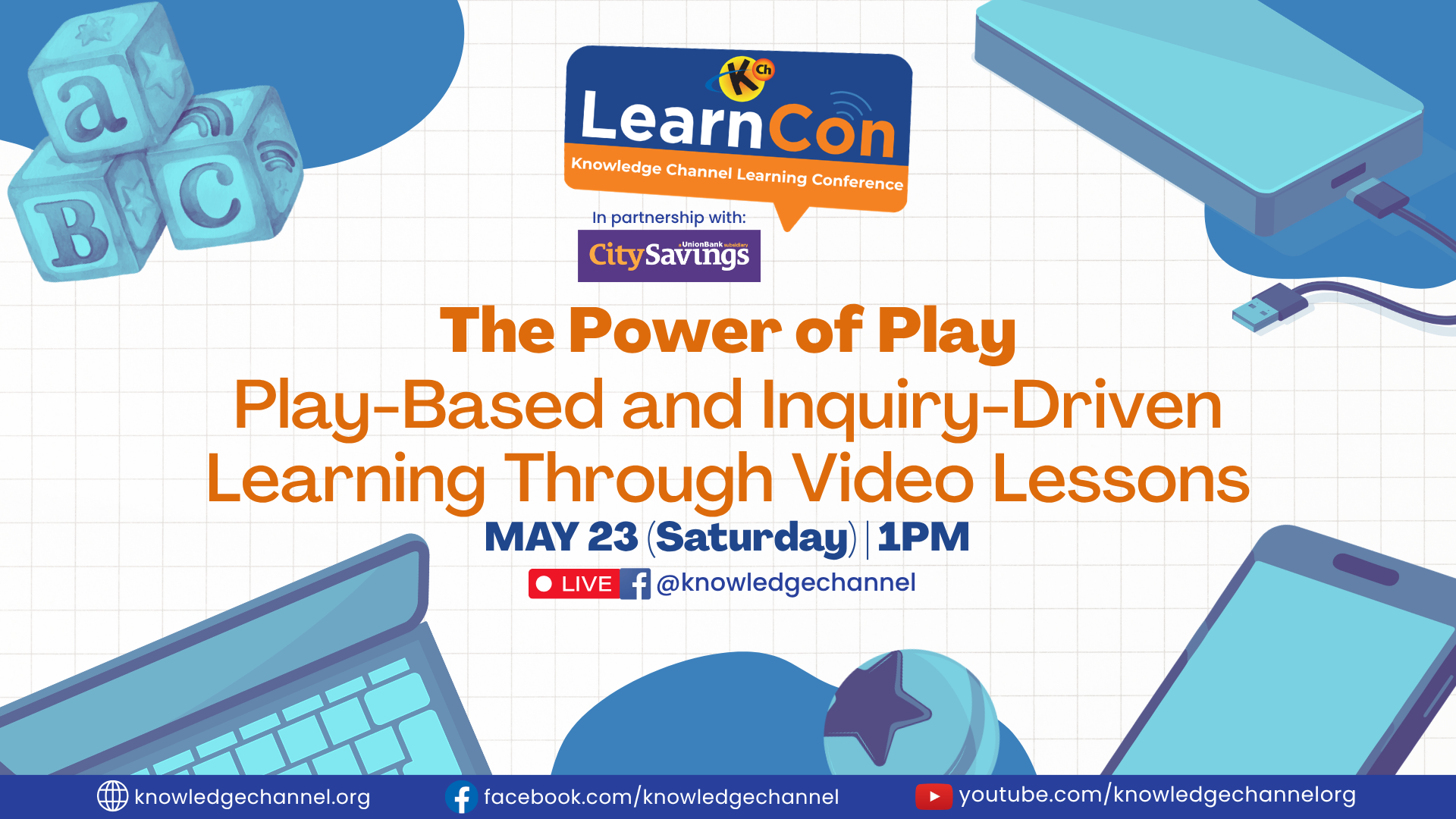
To equip educators with engaging teaching frameworks, the Knowledge Channel Foundation Inc. (KCFI), in partnership with City Savings Bank, successfully held another Knowledge Channel Learning Conference (LearnCon) entitled “The Power of Play: Play-Based and Inquiry-Driven Learning Through Video Lessons” last May 23, 2026.
Broadcasted via Facebook Live on the Knowledge Channel and Knowledge Channel Foundation pages, the event gathered around 12,000 educators, learning facilitators, and parents nationwide. Through expert-led sessions, participating teachers learned how to integrate play-based and inquiry-based frameworks using multimedia to foster a student-centered environment for curiosity, creativity, and critical thinking.
Attendees of this conference who successfully completed the post-evaluation requirements will receive 2.5 Continuing Professional Development (CPD) points.
Embracing play and inquiry
![[05-23-26] LearnCon Module 1-01.png](https://images.squarespace-cdn.com/content/v1/61236a89ddeb4615e347e1c3/1779935040957-T9TXC9W4QABL5JOF1QRH/%5B05-23-26%5D+LearnCon+Module+1-01.png)
![[05-23-26] LearnCon Module 1-07.png](https://images.squarespace-cdn.com/content/v1/61236a89ddeb4615e347e1c3/1779935043606-LFJSDGKQ9TZD5D6OH8LA/%5B05-23-26%5D+LearnCon+Module+1-07.png)
![[05-23-26] LearnCon Module 1-08.png](https://images.squarespace-cdn.com/content/v1/61236a89ddeb4615e347e1c3/1779935044165-QIPR253845LE2NQON1VA/%5B05-23-26%5D+LearnCon+Module+1-08.png)
In the opening module titled "Module 1: Maglaro at Magtanong - Understanding Play-Based and Inquiry-Based Learning Using Multimedia," Senior Education Program Specialist Ms. Ramona Magdalena F. Victoria from the DepEd Central Office’s Bureau of Curriculum Development emphasized that play is a fundamental right and essential for cognitive development.
She highlighted theories from Piaget and Vygotsky, reminding attendees that guided play builds critical problem-solving skills. "Although play has traditionally been positioned as a privilege, it must be repositioned as a right," she noted, urging teachers to shift away from strictly teacher-directed methods.
Furthermore, she encouraged educators to provide students with a well-prepared physical environment and a sense of choice during their learning process. She also stressed that integrating multimedia into playtime can effectively spark curiosity and promote a growth mindset among digital-native learners, setting the foundation for multimedia-supported discovery.
Watch(ing), wonder(ing), and work(ing)
![[05-23-26] LearnCon Module 2-01.png](https://images.squarespace-cdn.com/content/v1/61236a89ddeb4615e347e1c3/1779935189220-4SULYD33VC1RWKUP05SH/%5B05-23-26%5D+LearnCon+Module+2-01.png)
![[05-23-26] LearnCon Module 2-11.png](https://images.squarespace-cdn.com/content/v1/61236a89ddeb4615e347e1c3/1779935193093-NLDGS067NTWG1ZSYCXP6/%5B05-23-26%5D+LearnCon+Module+2-11.png)
![[05-23-26] LearnCon Module 2-20.png](https://images.squarespace-cdn.com/content/v1/61236a89ddeb4615e347e1c3/1779935189599-RSNKRSZWH1FI8IBFAVHW/%5B05-23-26%5D+LearnCon+Module+2-20.png)
Transitioning from theory to practice, "Module 2: Manood at Tuklasin - Applying Play-Based and Inquiry-Based Strategies Using Knowledge Channel Video Lessons" provided a concrete framework for classroom application. Victoria introduced the "Watch, Wonder, and Work" cycle, demonstrating how to use Knowledge Channel videos like Gen H: Generation Healthy to teach "Go, Grow, and Glow" foods, and Lakbay Aral to discuss weather and climate change. She also advises teachers to utilize videos as interactive play incubators.
To effectively engage learners, Victoria suggested designing relatable post-viewing activities, such as a classroom "supermarket" where students practically categorize healthy foods based on the video's lessons. She emphasized moving beyond simple recall questions toward higher-order thinking to deepen student comprehension during these activities. "We have to let our students feel safe in trying new things and adjusting," she highlighted, pointing out the immense value of interactive discovery.
By carefully scaffolding these multimedia resources, educators can seamlessly align play-based activities with the DepEd’s MATATAG curriculum competencies. She reminded attendees that the primary goal is not to perform tasks perfectly, but to make the learning process highly meaningful.
Designing meaningful classroom play
![[05-23-26] LearnCon Module 3-01.png](https://images.squarespace-cdn.com/content/v1/61236a89ddeb4615e347e1c3/1779935370837-CH73H3MIK9RNODJH9OT2/%5B05-23-26%5D+LearnCon+Module+3-01.png)
![[05-23-26] LearnCon Module 3-03.png](https://images.squarespace-cdn.com/content/v1/61236a89ddeb4615e347e1c3/1779935373574-0P3MWQIFZA0DIUCA6V4E/%5B05-23-26%5D+LearnCon+Module+3-03.png)
![[05-23-26] LearnCon Module 3-04.png](https://images.squarespace-cdn.com/content/v1/61236a89ddeb4615e347e1c3/1779935372074-YL73W4M52YG2CBQ5HMS8/%5B05-23-26%5D+LearnCon+Module+3-04.png)
For the final module, "Module 3: Paglikha - Designing Play-Based Inquiry Lessons Using Multimedia Resources," the focus shifted to strategic lesson planning and holistic evaluation. Victoria guided teachers on unpacking curriculum targets to create clear, manageable learning experiences that naturally incorporate playful inquiry.
She advised educators to understand their diverse learners first, ensuring that the chosen multimedia materials truly match the classroom's context. "If you won't be able to handle your class in the first month, then that would be difficult in the succeeding months," she warned regarding the importance of setting clear routines.
Evaluation in a play-based setup goes beyond traditional pen-and-paper tests, encompassing project-based tasks, peer assessments, and direct observation of student participation. She underscored the importance of teacher reflection, introducing the "reflect and reset" concept when a classroom activity does not go as planned, validating the continuous trial-and-error nature of effective teaching.
Navigating diverse learner needs
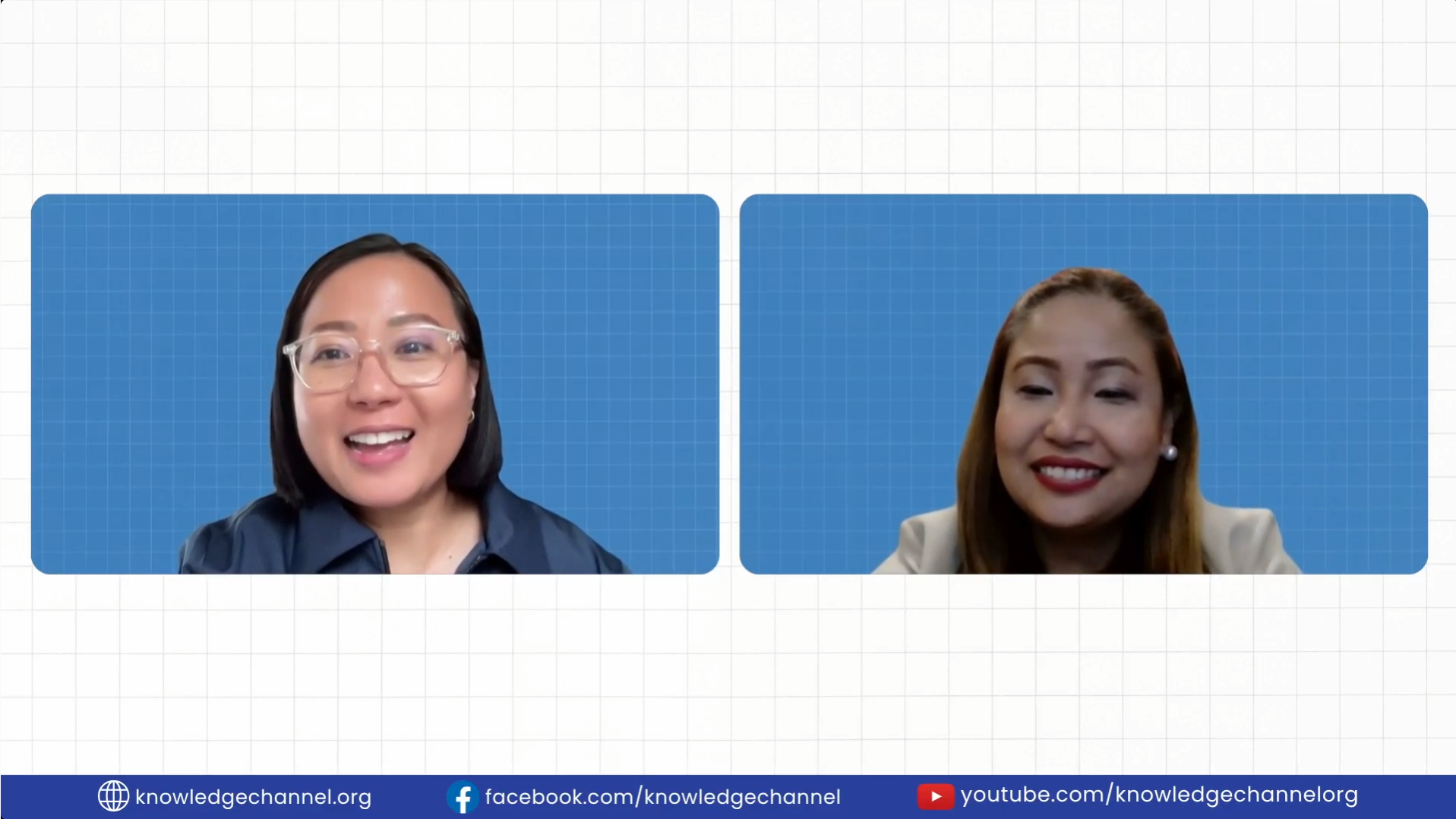
During the engaging panel discussion, Victoria directly addressed real-world classroom challenges, including managing learners with attention deficit hyperactivity disorder (ADHD) and applying play-based strategies to older students in junior high school. She recommended incorporating physical movement games and specific interest-based tasks to help hyperactive students channel their energy constructively.
When asked about balancing playful exploration with the heavy academic pressures of standardized testing, she suggested collaborating through Learning Action Cell (LAC) sessions to prioritize essential competencies. She also reassured teachers that short, meaningful play-based tasks (like role-playing a community council of leaders) can effectively relieve academic stress without sacrificing curricular goals.
Empowered by these innovative teaching strategies, educators are now better equipped to transform standard video lessons into dynamic, learner-centered adventures. KCFI continues its steadfast mission to uplift the quality of basic education through targeted, research-backed training programs. Let us consistently collaborate to transform every screen into a doorway of boundless learning, play, and imagination!
KCFI will conduct its upcoming LearnCon on May 30, this time focusing on the topic of "Smart Screen Time". For more information regarding the upcoming event, check this link. Like and follow the social media accounts of Knowledge Channel and Knowledge Channel Foundation to receive immediate updates on new content, program schedules, and other important announcements.
