
Over 3,000 Educators Tuned in to learn Video-Based Instruction Strategies at “Empowering Schools Through Multimedia” Conference
By Rebelyn Beyong
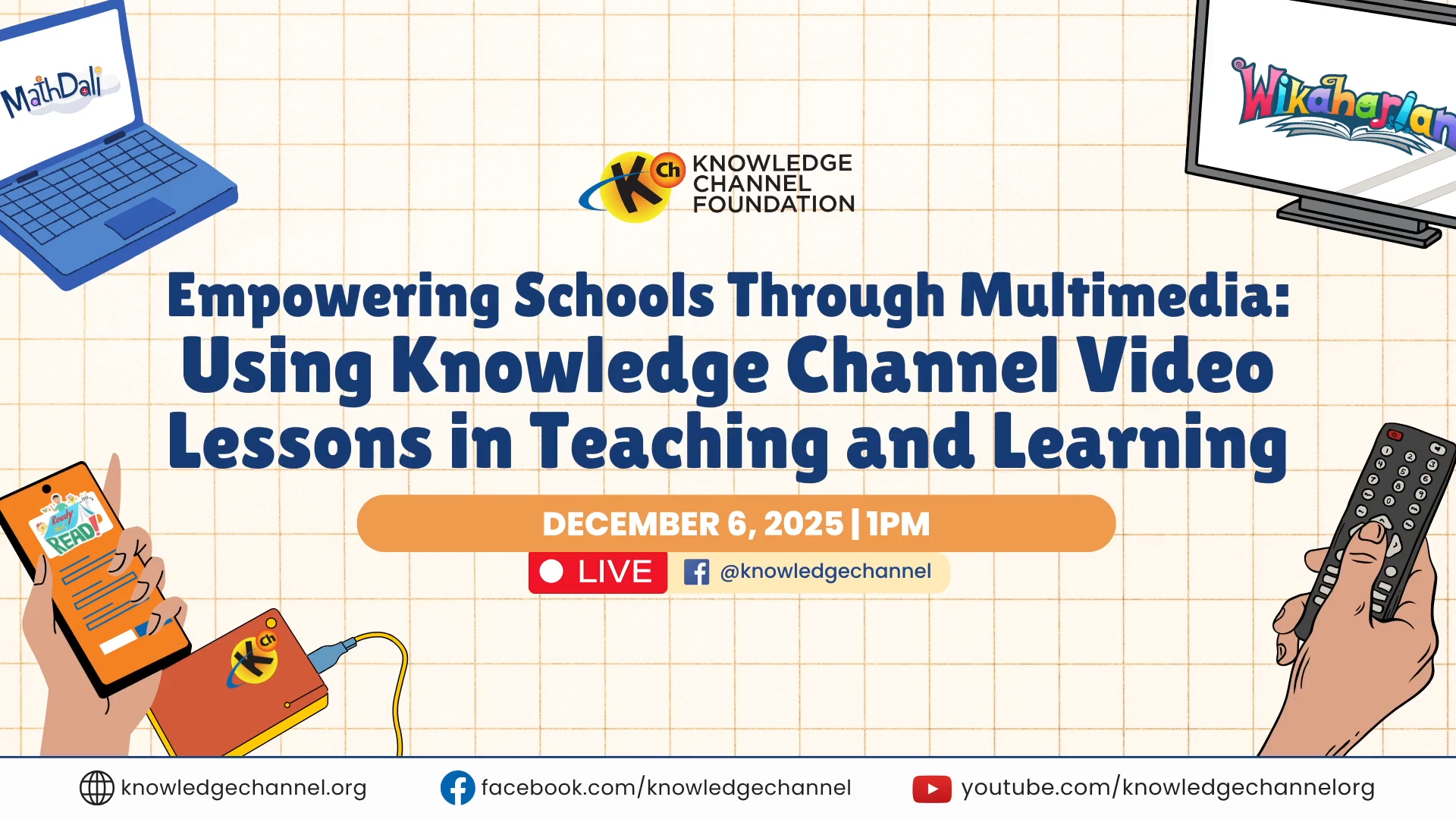
Over 3,000 teachers and education stakeholders gathered virtually last December 6 for the Knowledge Channel Foundation Inc. (KCFI)’s free online conference, aiming to modernize Filipino classrooms through multimedia integration. Titled “Empowering Schools Through Multimedia: Using Knowledge Channel Video Lessons in Teaching and Learning,” the online event served as a critical refresher for KCFI partner schools, equipping educators with strategies to bridge the gap between "digital native" learners and traditional curriculum requirements.
Multimedia as a pedagogical necessity
Rina Lopez, KCFI President and Executive Director, opened the session by emphasizing the urgency of adapting teaching styles to the current generation, regardless of a school’s connectivity status. “Ang mga mag-aaral natin ngayon ay digital natives,” Lopez stated. “Kaya mahalaga ang videos at digital tools para gawing mas engaging, learner-centered at epektibo ang pagkatuto ano man ang antas ng connectivity ng paaralan.” Lopez highlighted KCFI’s 26-year commitment to education, reinforcing the foundation's focus on early literacy and numeracy through resources like Ready, Set, Read!, Wikaharian, and MathDali.
From Consumption to Creation: Theory into Practice
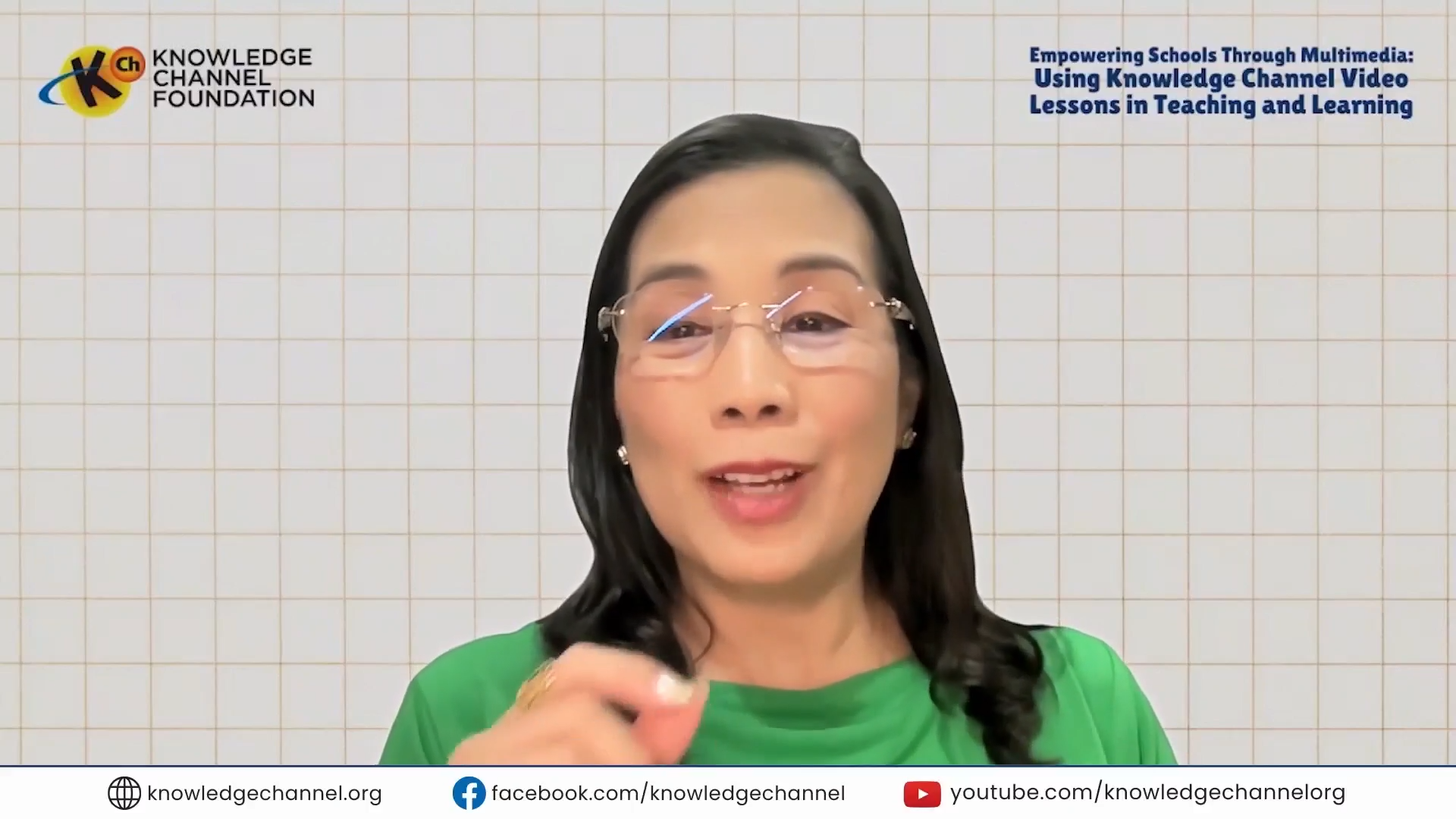
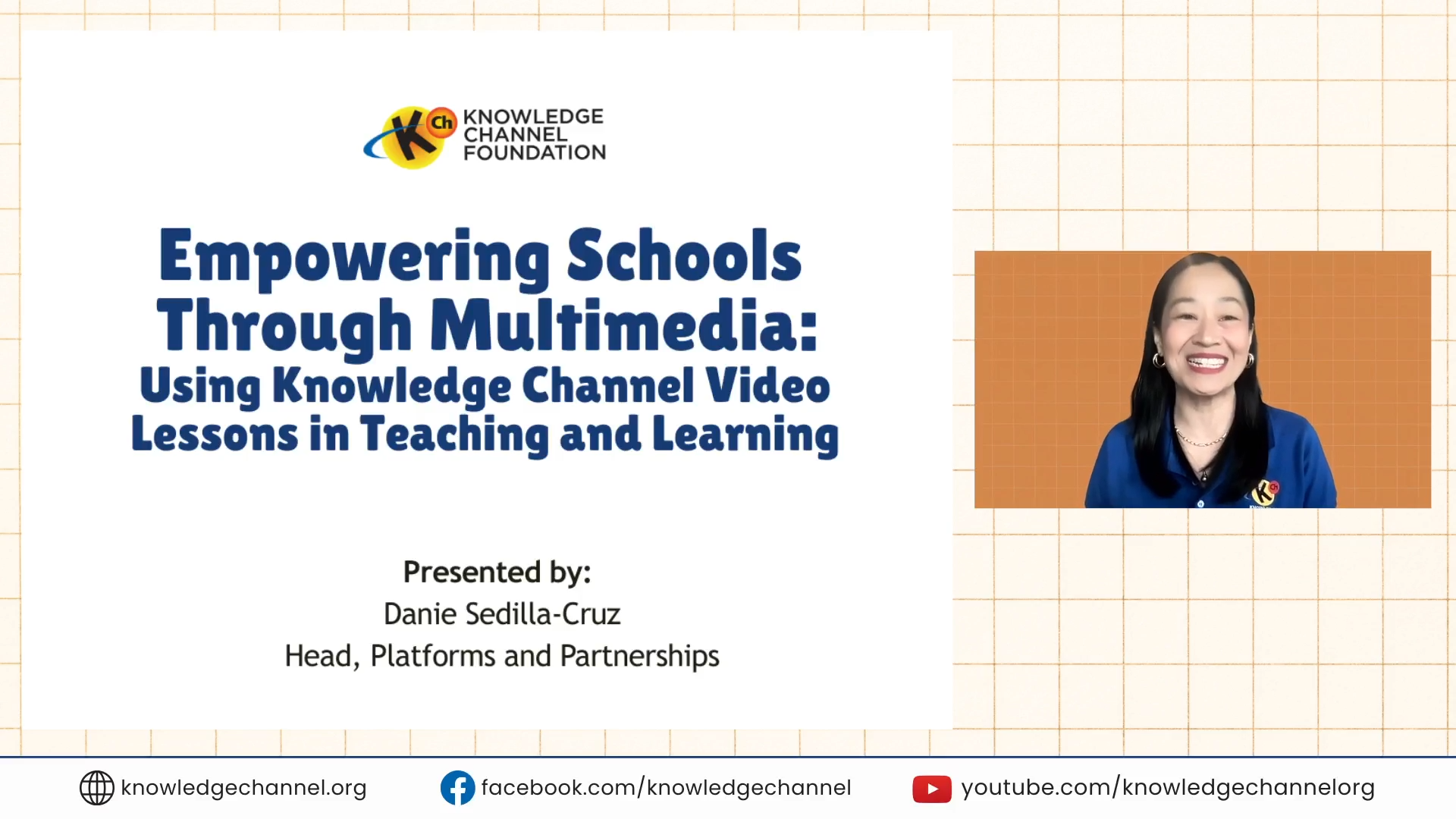
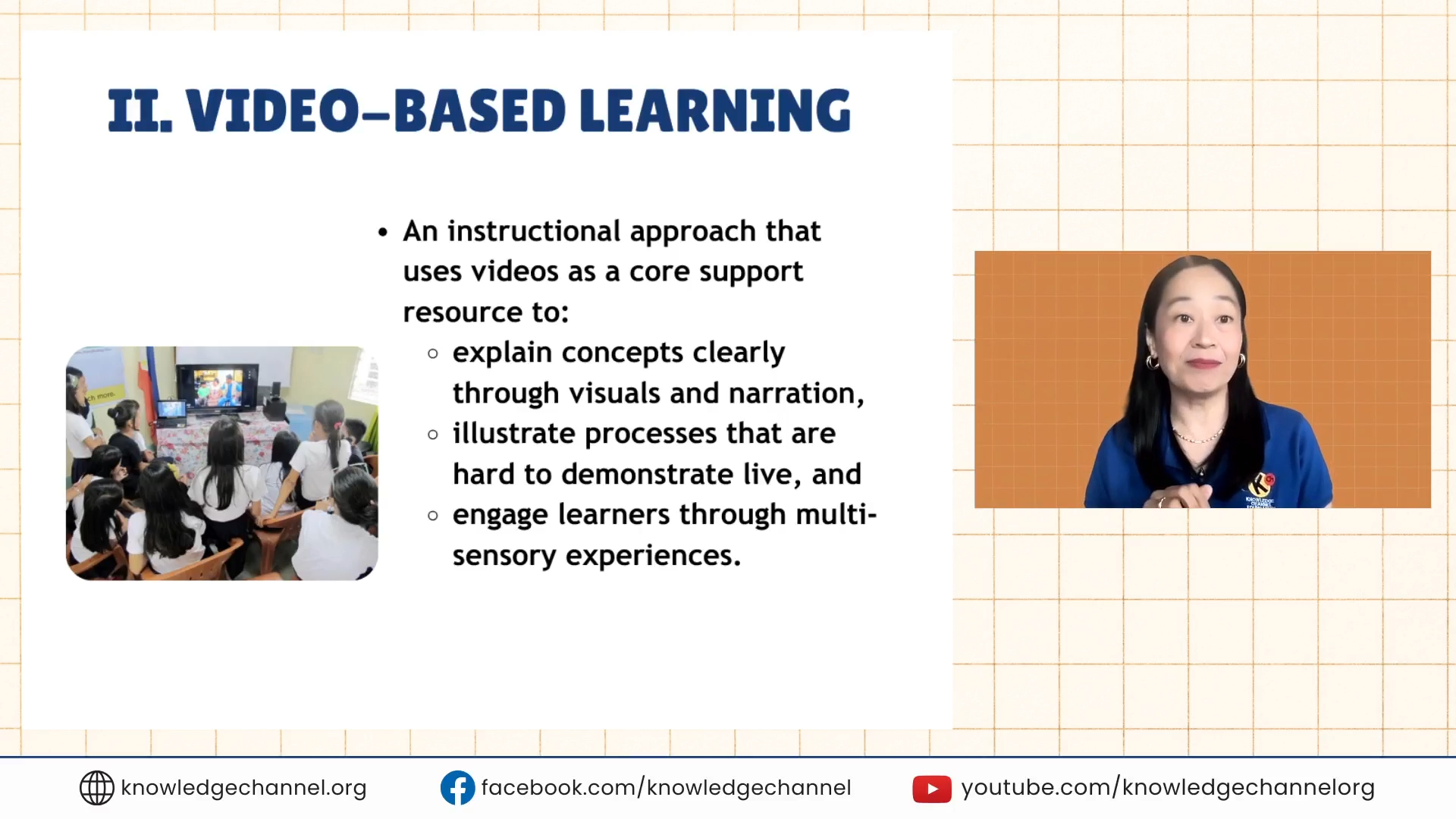
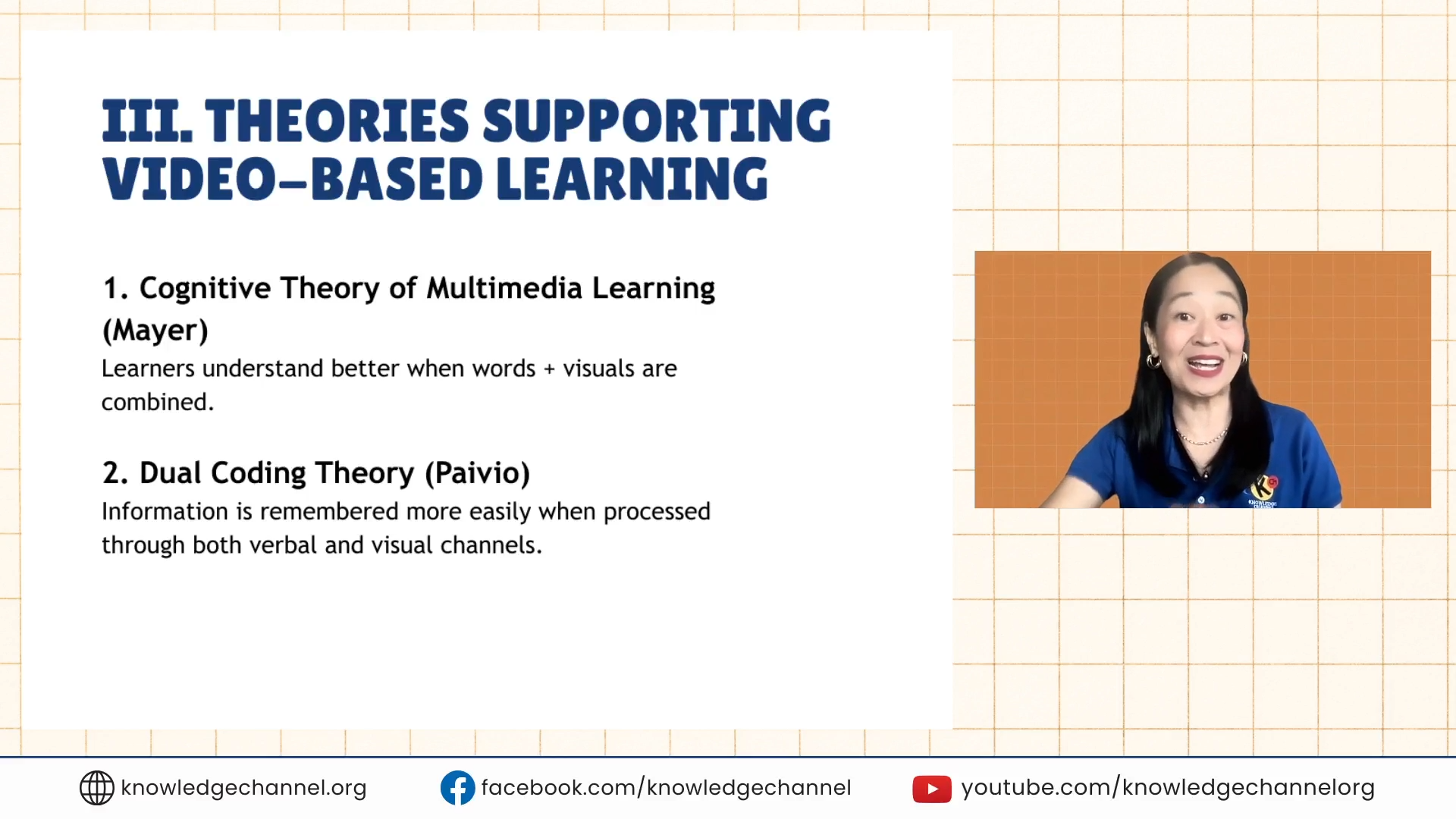
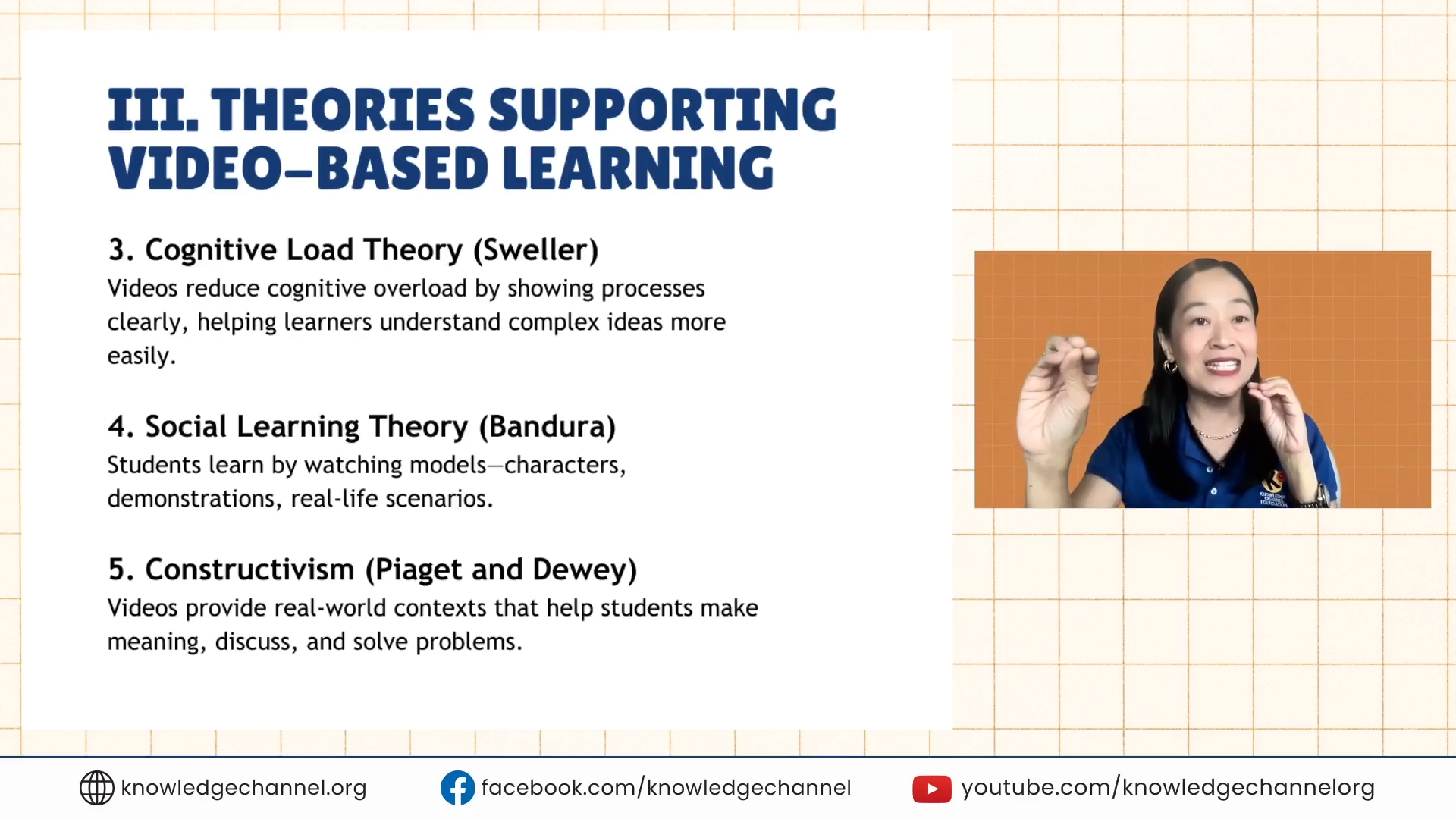
The core training was led by Danie Sedilla-Cruz, KCFI’s Platforms and Partnerships Head. Grounding her session in established frameworks, she cited Mayer’s Cognitive Theory of Multimedia Learning and Paivio’s Dual Coding Theory to explain how engaging both verbal and visual channels boosts retention. She also referenced Sweller’s Cognitive Load Theory on reducing mental strain and Bandura’s Social Learning Theory on the power of role-modeling.
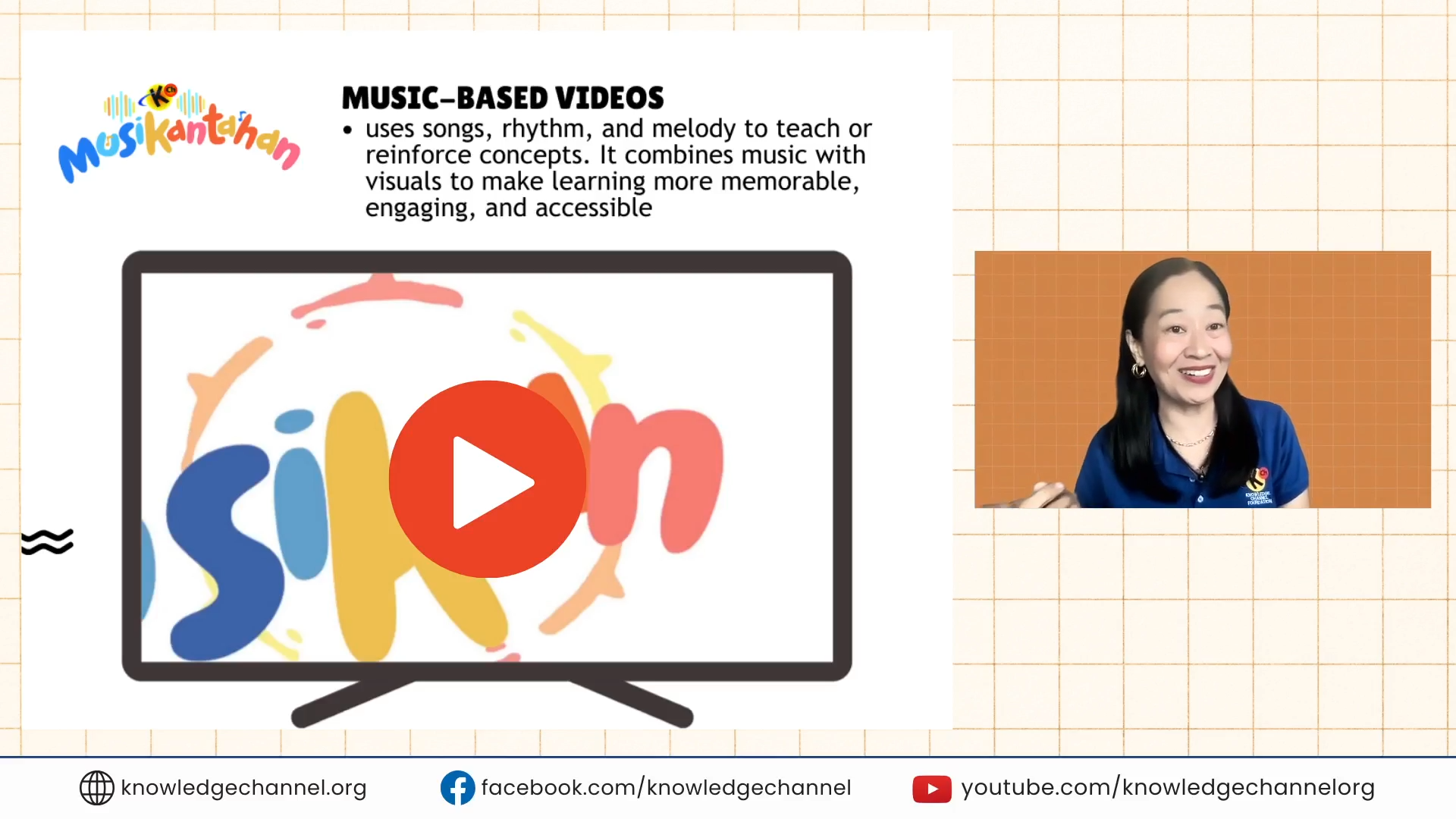
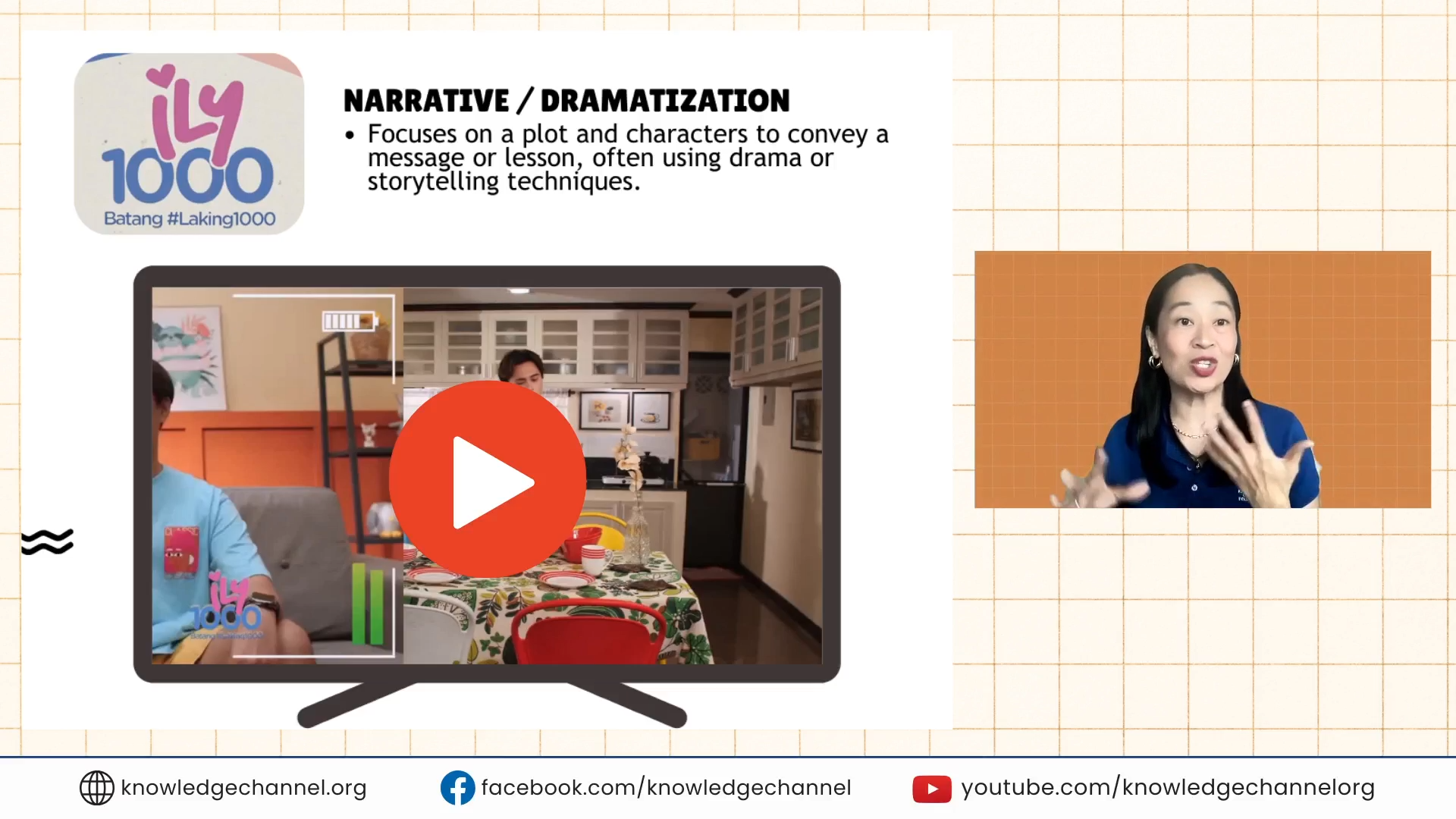
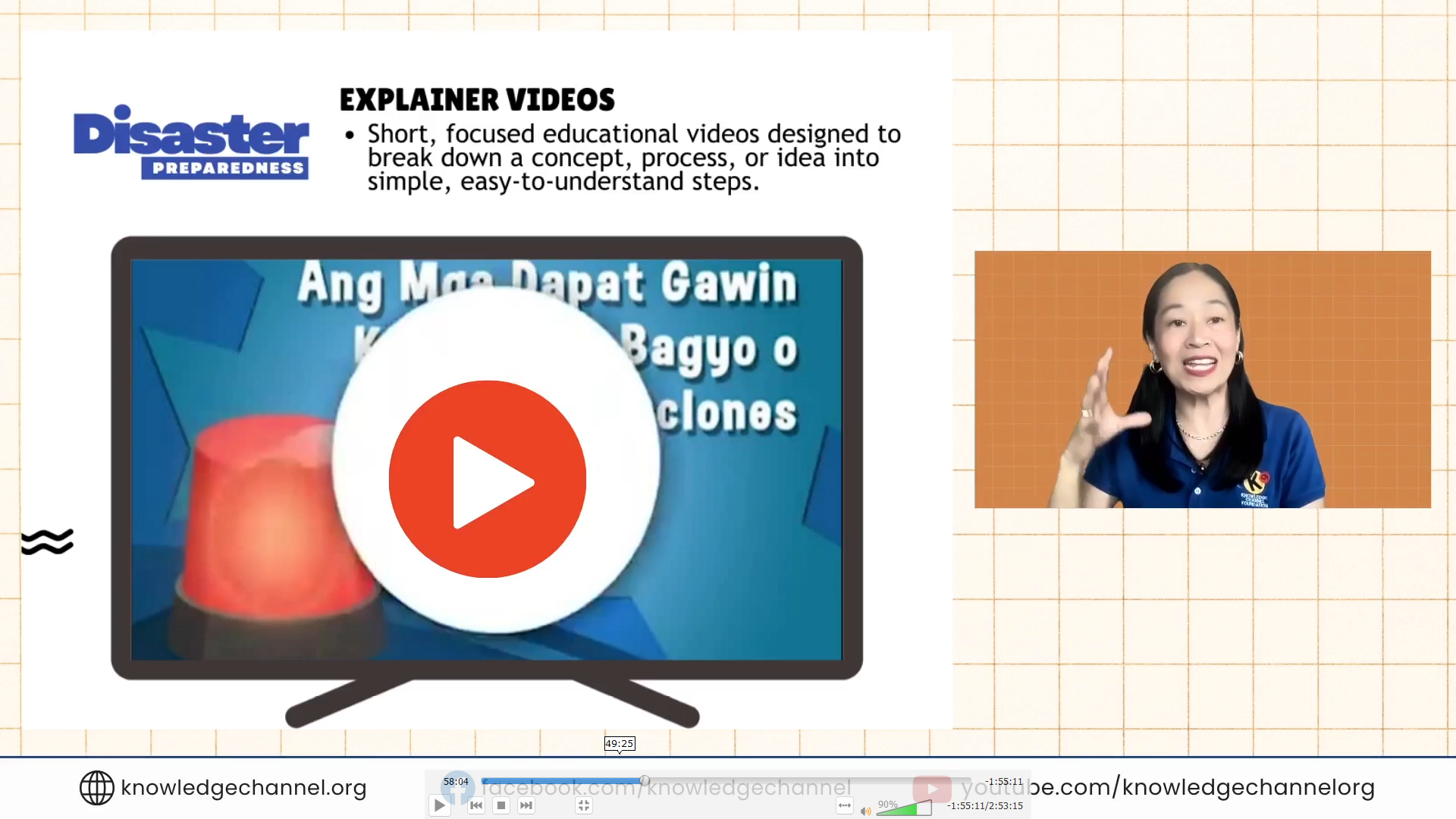
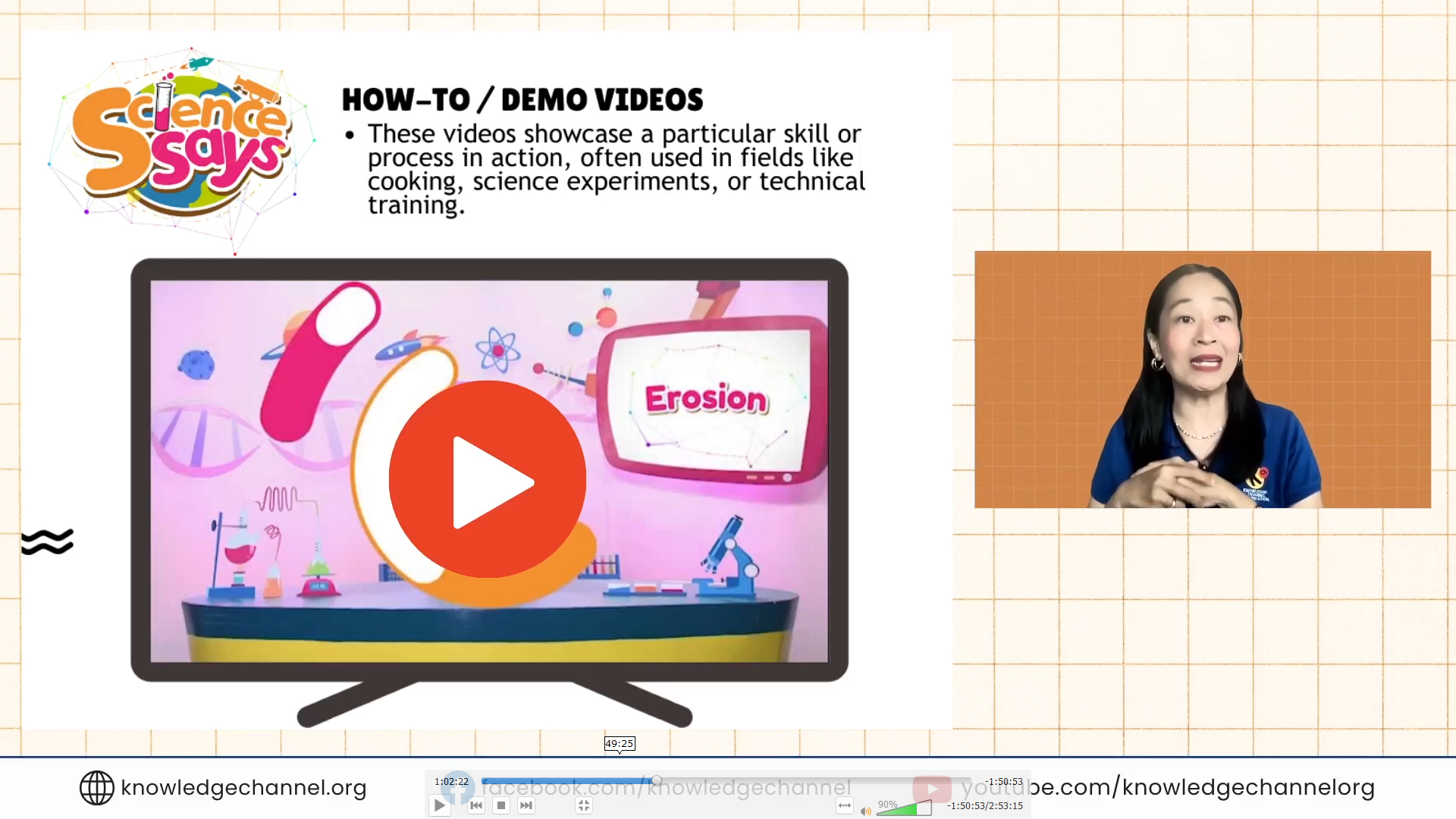
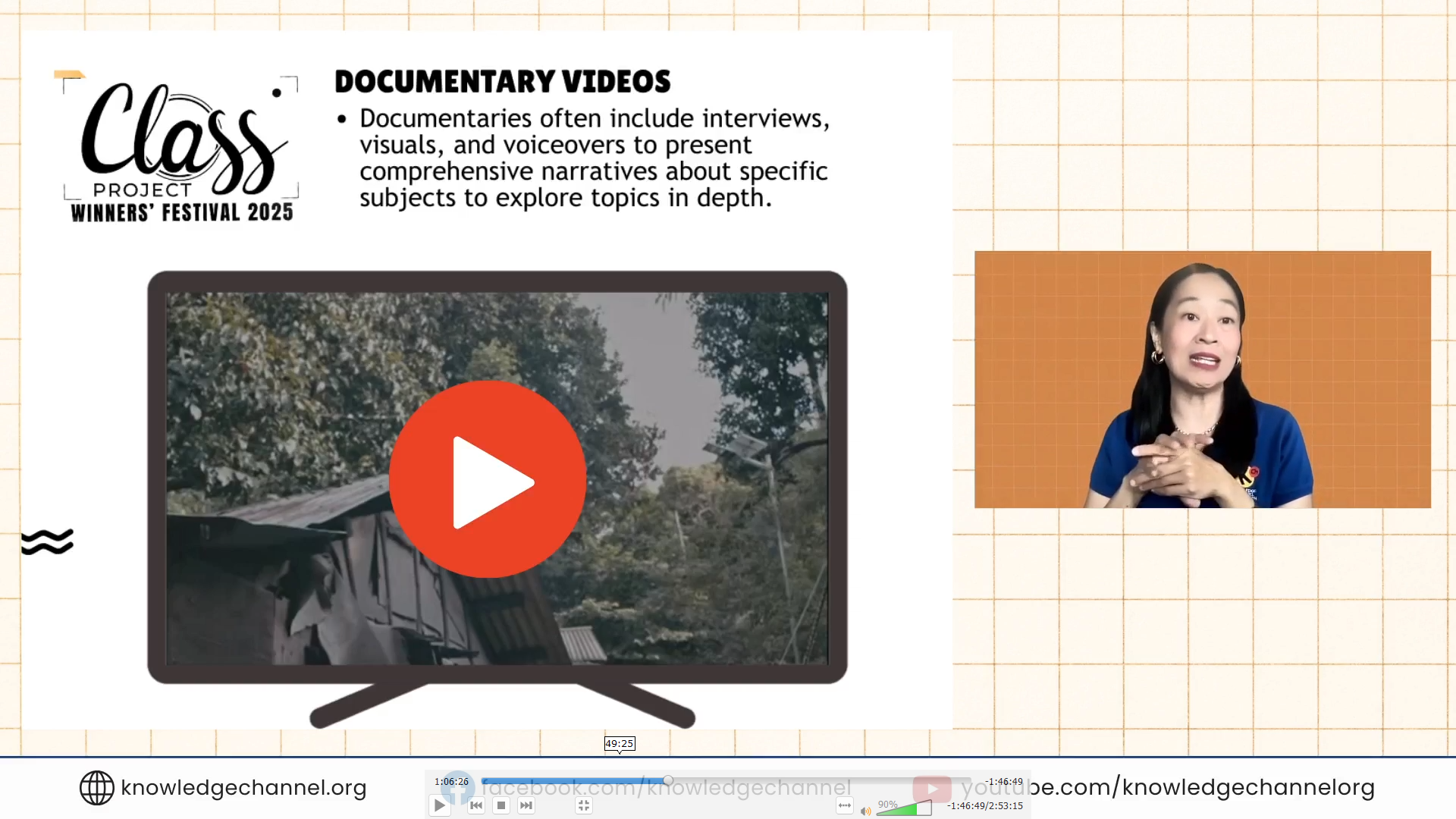
Sedilla-Cruz presented data from a survey of over 33,000 teachers, revealing that music-based videos and dramatizations are the most utilized formats in Filipino classrooms. To match these preferences, she showcased aligned Knowledge Channel programs:
Music-Based: Musikantahan (rhythm and melody for memory).
Narrative/Dramatization: I Love You 1000 (storytelling for early childhood).
Explainer Videos: Disaster Preparedness (simplifying complex concepts).
How-To/Demo: Science Says (experiments and practical skills).
Subject Staples: MathDali (Math), Wikaharian (Filipino), and WOW (Araling Panlipunan).
Moving from LOTS to HOTS
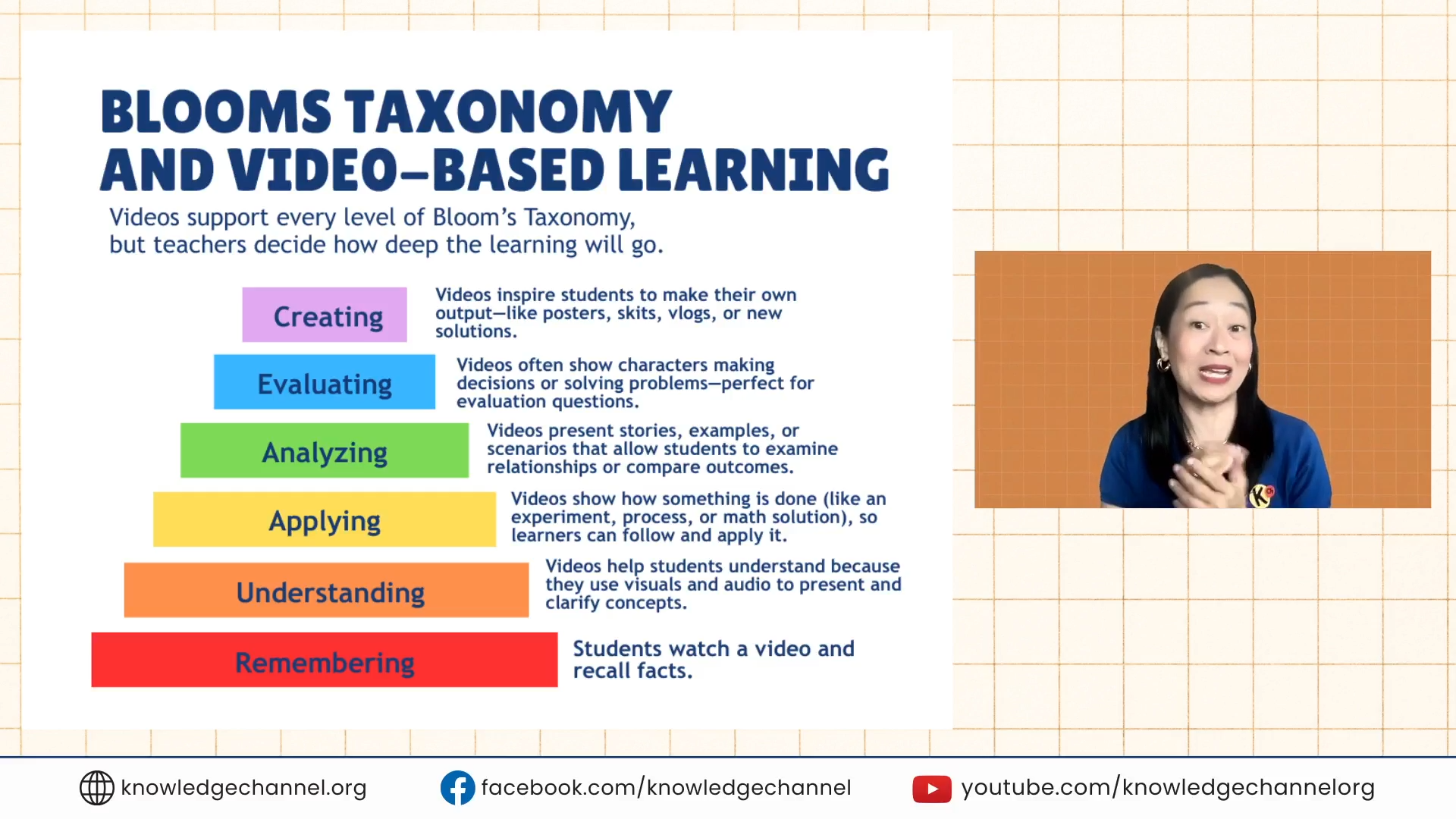
Sedilla-Cruz cautioned against the misconception that video viewing is passive. “It’s not the video that deepens learning — it’s what we ask students to do after watching,” she noted. She introduced a progression matrix integrating video lessons with Bloom’s Taxonomy, guiding teachers to move learners from LOTS (Lower Order Thinking Skills), such as remembering content, to HOTS (Higher Order Thinking Skills), where learners analyze and create outputs.
Key active viewing strategies included:
Pause–Prompt–Connect: Stopping a video to foster prediction and comprehension.
Jigsaw Viewing: Assigning groups to watch different segments for peer teaching.
Video Journaling: Encouraging learners to record reflections.
Addressing the connectivity gap
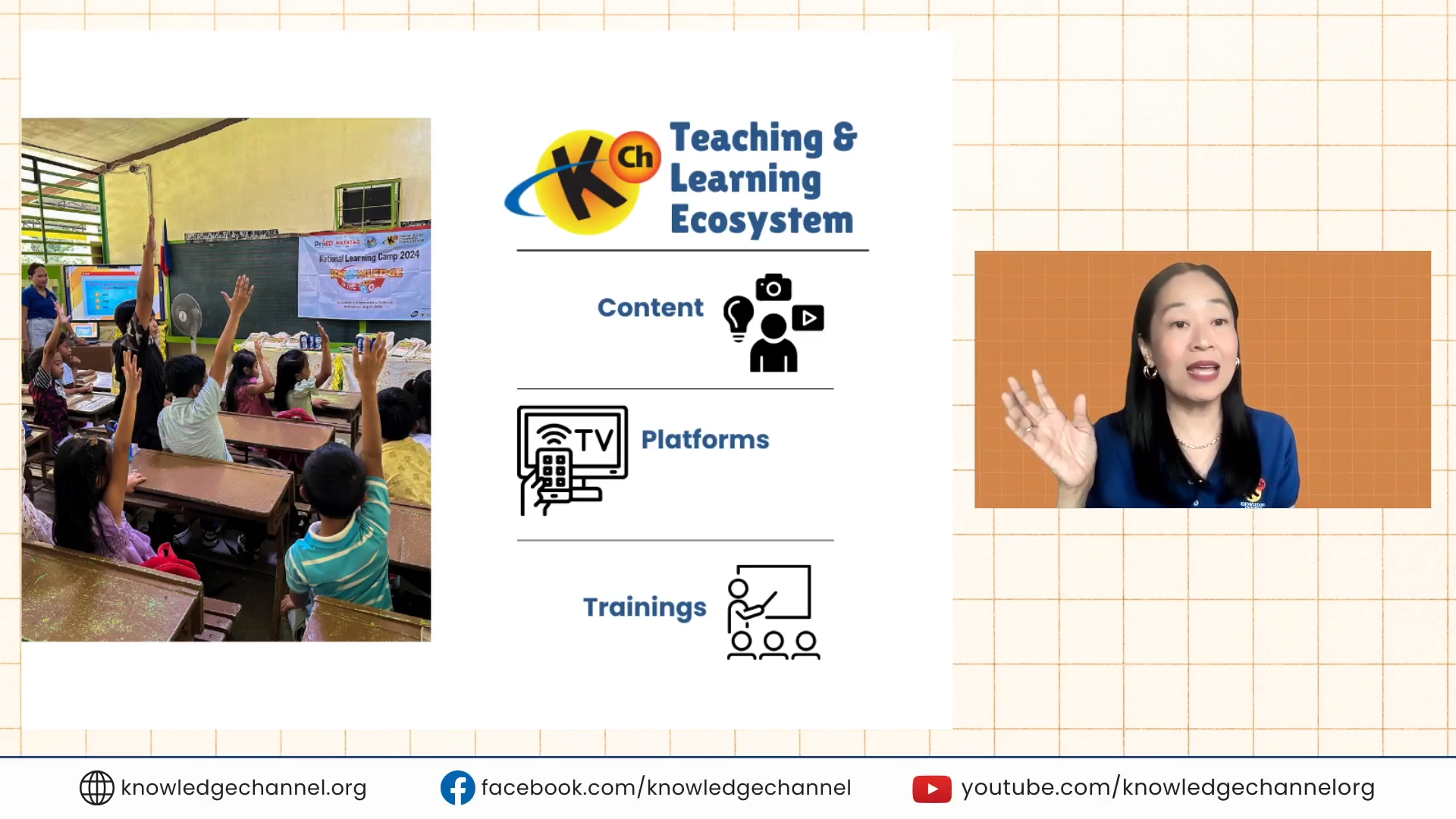
Addressing the common sentiment of "Wala kaming internet," Sedilla-Cruz presented the Knowledge Channel Teaching and Learning Ecosystem, ensuring access regardless of infrastructure:
On-Air (Broadcast): For schools relying on television, KCFI provides daily curriculum-aligned programming mimicking a school schedule through digital free TV, cable and satellite.
Online: For teachers with internet access, KCFI offers on-demand resources via the official YouTube channel, Facebook, TikTok, and streaming on iWant and CignalPlay.
Offline: For schools with no internet, KCFI provides robust offline solutions like Knowledge Channel Portable Media Library (KCPML) —anexternal hard drive system loaded with thousands of video lessons, games, and session guides and Knowledge Channel TV Package (KCTV) — a complete media package including a TV set and pre-loaded educational content.
KCFI provided a walkthrough of the KCPML through a video, demonstrating how offline schools can access thousands of curriculum-aligned resources.
Teacher empowerment
The event concluded with an interactive "Kumustahan," awarding certificates with CPD points to active participants. In her closing, Sedilla-Cruz reaffirmed the teacher's role as the primary facilitator of technology: “Nasa inyo po ang pinakamahalagang kapangyarihan para matulungan ang ating mga kabataan.” By providing strategies to navigate both digital platforms and offline challenges, the conference successfully positioned teachers not just as consumers of content, but as active architects of a learner-centered, future-ready curriculum.