
MEDIAskarteng Pagtuturo: KCFI’s LearnCon Empowers Early Educators with Multimedia Teaching Strategies
By Rebelyn S. Beyong
To equip early childhood educators with innovative, play-based teaching tools and strategies, the Knowledge Channel Foundation Inc. (KCFI) conducted the Knowledge Channel Learning Conference (LearnCon), entitled “MEDIAskarteng Pagtuturo: Empowering CDTs and CDWs with Multimedia-Supported Strategies for Early Learning and Development” last May 9, 2026.
Broadcasted via Facebook on the Knowledge Channel and Knowledge Channel Foundation (KCFI) pages, the event gathered over 3,500 concurrent viewers live, consisting of Child Development Workers and Teachers (CDW/Ts), parents, and caregivers. The LearnCon focused on empowering participants with multimedia-supported strategies to promote holistic early learning, bridging the gap between digital native learners and foundational developmental needs.
Recognizing the critical role of CDW/Ts and parents as a child's first teachers, KCFI President and Co-Founder Rina Lopez opened the event by highlighting the impact of intentional media use. “At KCFI, we believe that media, when used well and guided by caring adults, can be a powerful tool for education and childhood development,” Lopez stated. She emphasized that investing in early childhood development (ECD) goes beyond content and requires systemic support, adding, “When we invest in our youngest learners and in those who guide and care for them, we build a stronger foundation for the future of every Filipino child.”
Redefining media in the early years
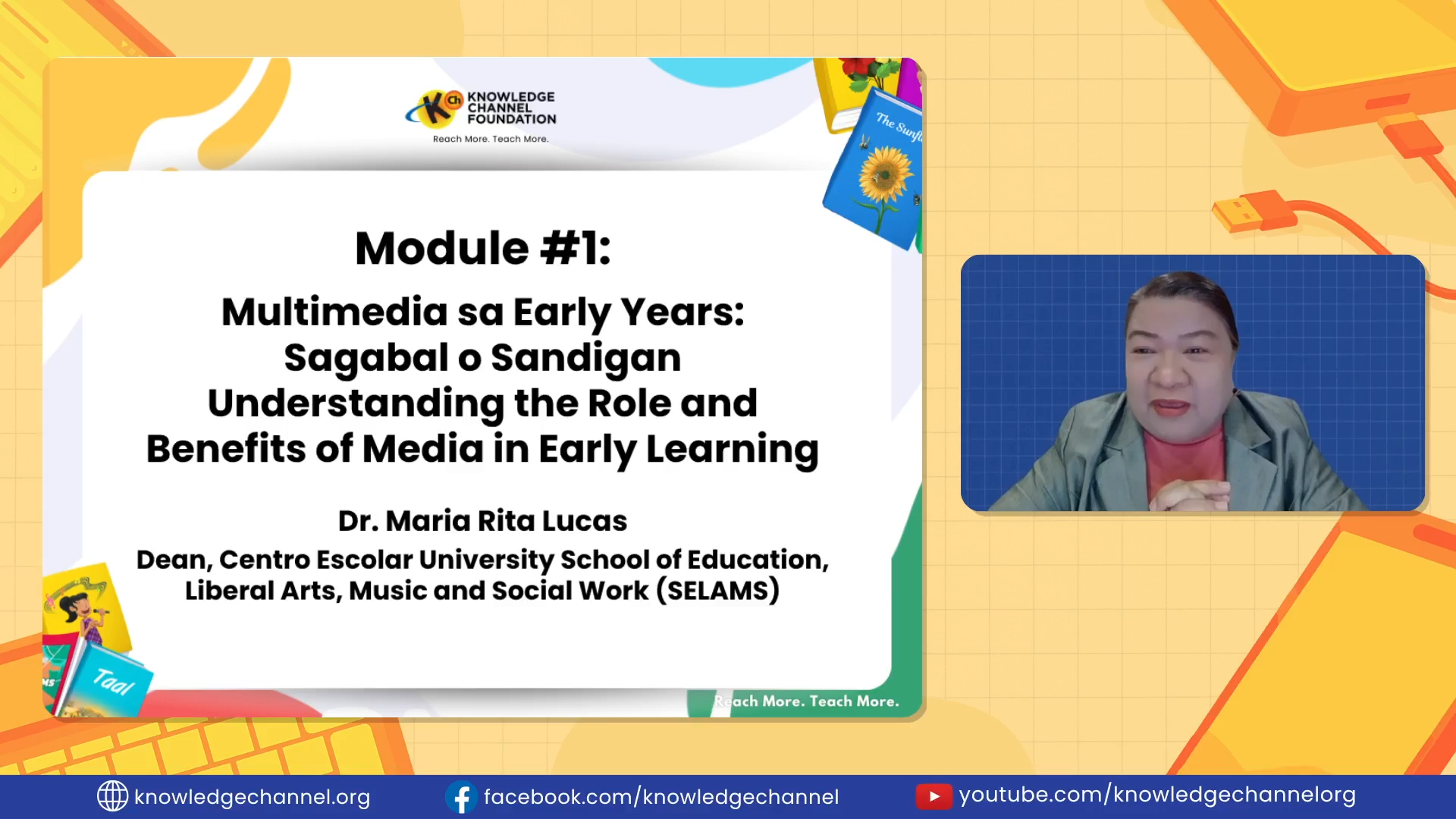
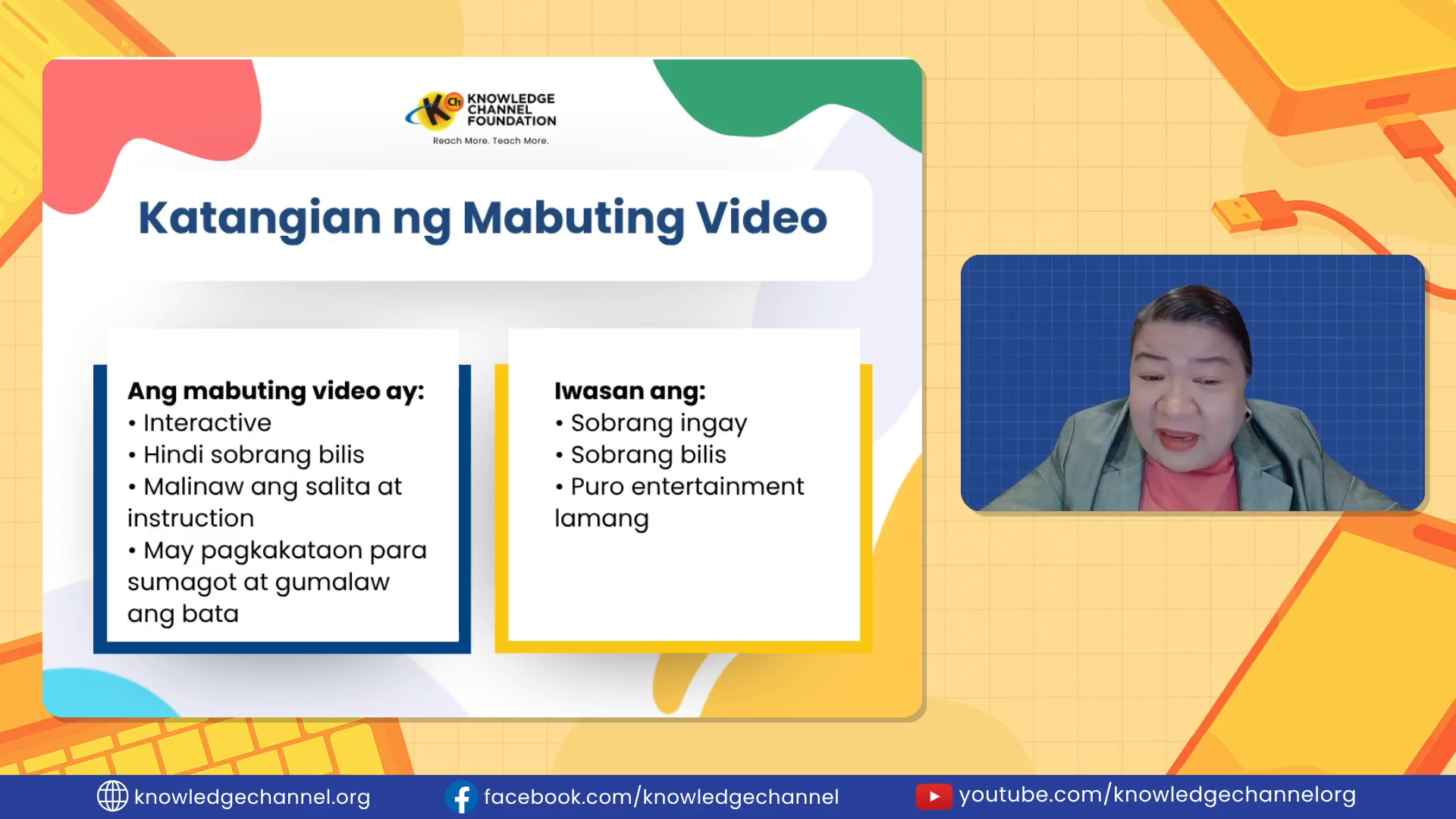
The first module, led by Dr. Maria Rita Lucas, Dean of Centro Escolar University’s School of Education, Liberal Arts, Music and Social Work (SELAMS), tackled the dual nature of digital tools in her session, "Multimedia sa Early Years: Sagabal o Sandigan? - Understanding the Role and Benefits of Media in Early Learning". Grounded in the principles of the National Association for the Education of Young Children (NAEYC) in the United States, Dr. Lucas warned against the dangers of unregulated screen time, particularly the rise of fast-paced, noisy "brain rot" videos that offer no educational value and can negatively alter a child's socio-emotional skills and attention span.
Instead of passive viewing, she advocated for developmentally appropriate, interactive media that prompts young learners to think, respond, and move. “Ang screen ay kasangkapan lamang, hindi kapalit ng relasyon,” Dr. Lucas reminded the audience, stressing that digital media should never act as a digital babysitter, replacing human interaction.
She also introduced a simple yet highly effective framework for educators and parents: Manood, mag-usap, maglaro (Watch, talk, play). In this approach, the video is merely the starting point of real learning that happens during the collaborative discussions and physical play that follow.
Designing play-based multimedia activities
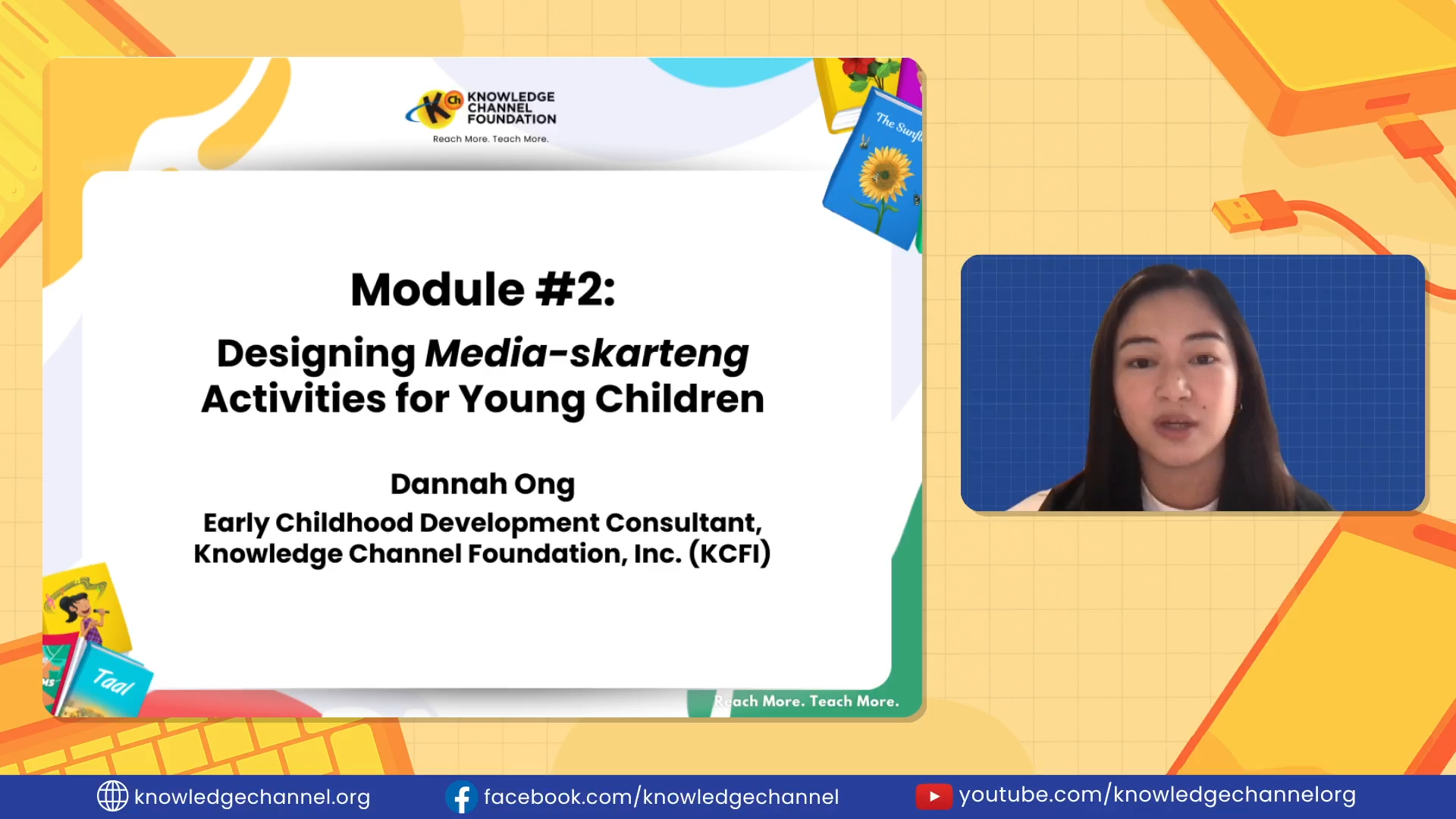
Translating educational theory into classroom practice, KCFI’s ECD consultant Dannah Ong led the second module, "Paano Maging MEDIAskarteng Teacher?: Designing MEDIAskarteng Activities for Young Children.” She guided participants on purposefully integrating video lessons into daily routines—such as circle time, transitions, and free play—without leaving the television running idly all day. Ong utilized KCFI’s flagship programs to demonstrate how active viewing works in real-time.
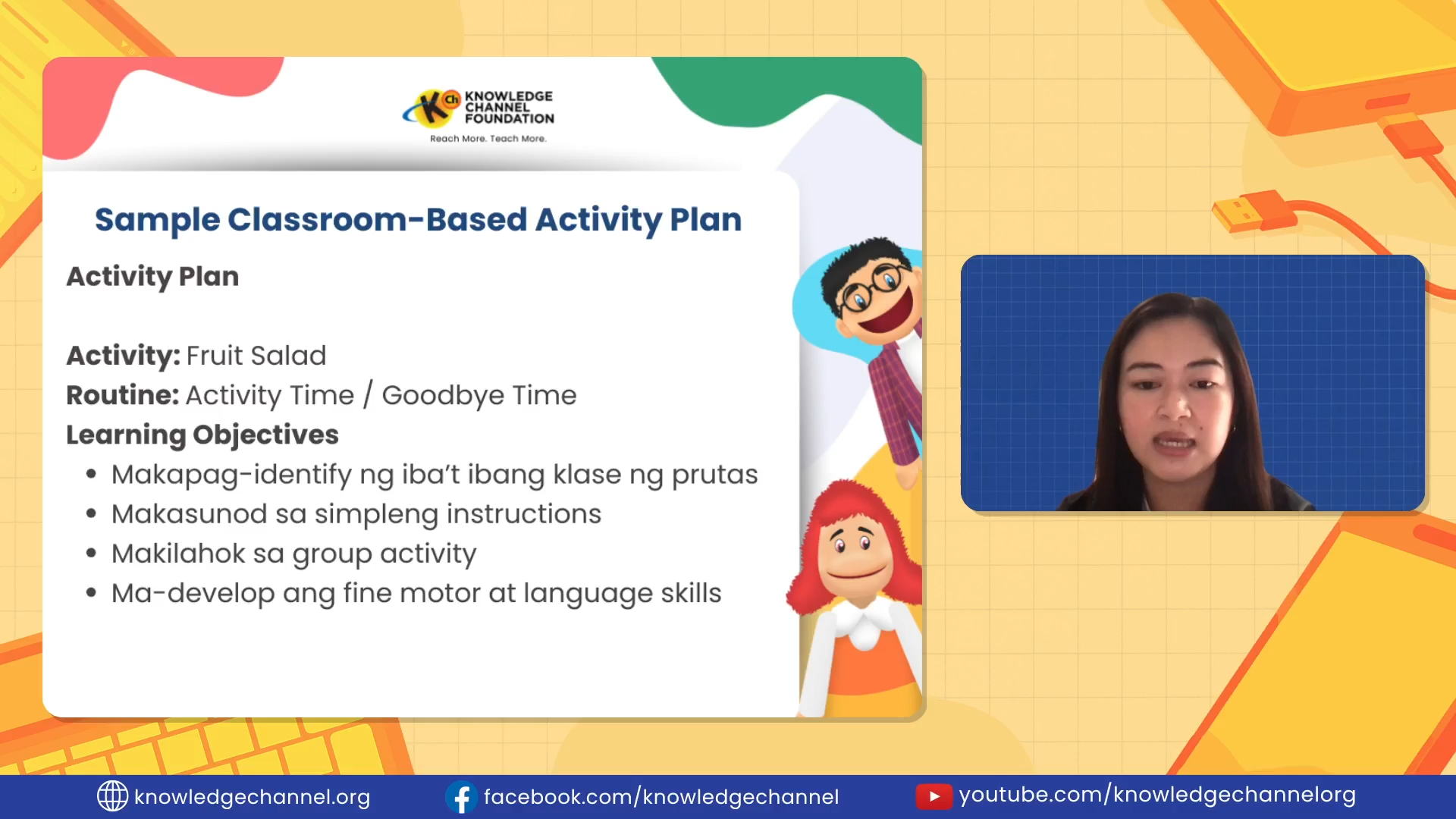
She highlighted Musikantahan as a prime music video resource for movement and cognitive breaks. To illustrate, Ong used Musikantahan's "Fruit Salad" video as a case study. Rather than just letting children watch the song, she demonstrated how teachers can design post-viewing learning stations: a dramatic play area acting as a "fruit market," an art station for drawing favorite fruits, and a sorting game where children categorize toy fruits by color and shape.
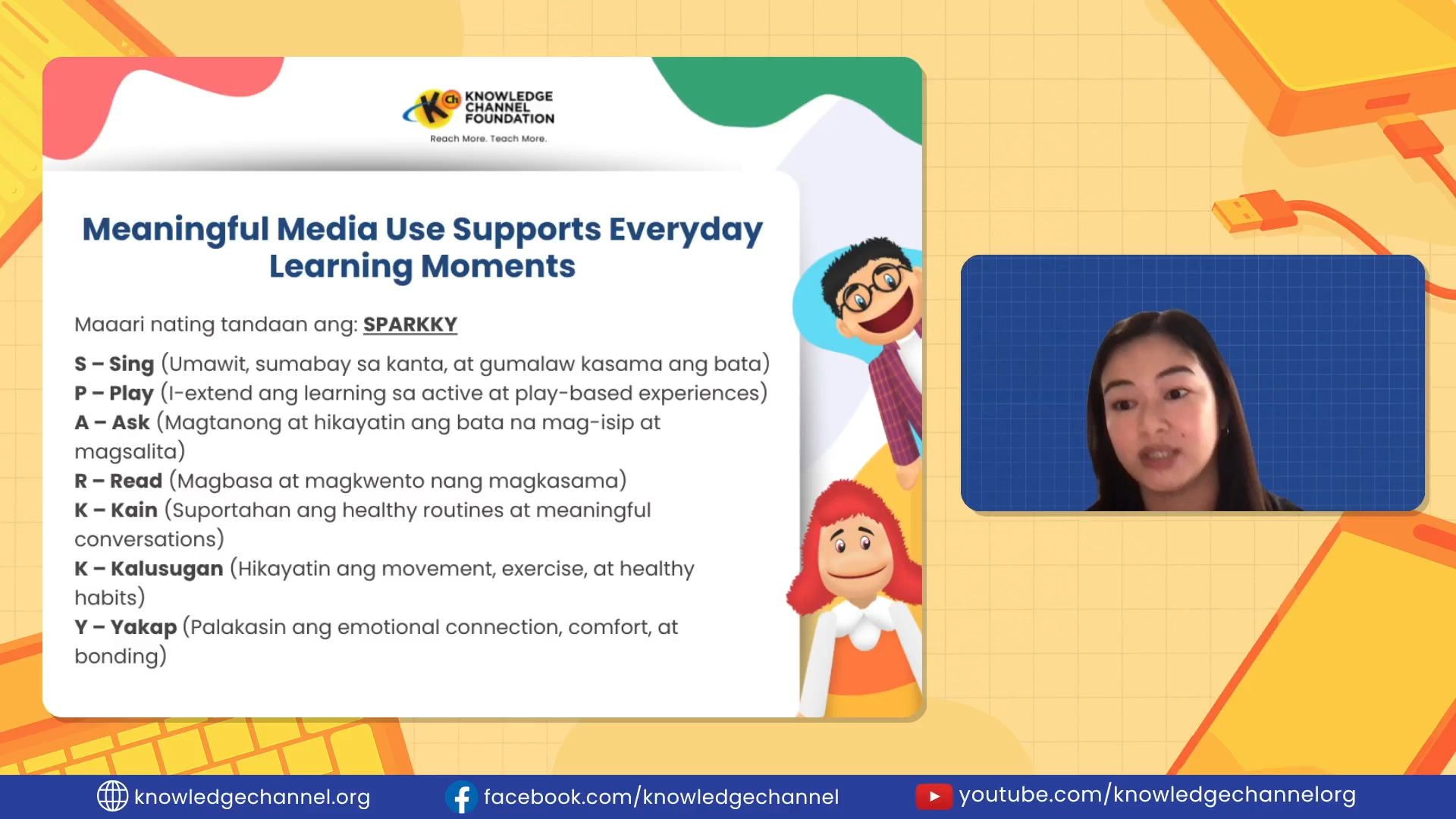
Additionally, using the Kwentoons story of "Si Bobet at si Bong"—a tale about a duck and a slow turtle realizing their unique individual strengths—she showed how to process emotional themes with young learners. She suggested follow-up activities at home, such as hosting a "Family Talent Night" or a "Kindness Challenge," to foster self-esteem, empathy, and socio-emotional growth based on the characters' experiences. To make this active viewing universally meaningful both in learning centers and at home, she introduced the KCFI’s SPARKKY framework to support everyday learning moments: SPARKKY stands for: Sing, Play, Ask, Read, Kain, Kalusugan and Yakap
“Children learn best when teachers and parents work together to transform video lessons into active, playful, and meaningful experiences,” Ong emphasized.
Navigating digital challenges and screen time struggles
During the panel discussion, Dr. Lucas addressed the concerns about media addiction at home, she cautioned parents against engaging in power struggles over gadgets. “Don't struggle with the child... redirect and give a substitute that is equally engaging,” she advised.
To prevent gadget dependency in the classroom, Ong reminded educators to use media intentionally rather than leaving screens on all day, encouraging teachers to become the "visual" lead themselves to boost engagement.“Ang media po ay hindi natin kalaban; we just need to be equipped and be responsible media users ourselves, and then everything else will follow,” she stated.
By transforming passive screen time into highly interactive learning time, KCFI ensures that every play, pause, and rewind brings the Filipino child one step closer to a brighter, holistic future.
Like and follow the social media accounts of Knowledge Channel and Knowledge Channel Foundation to receive updates on new content, program schedules, and other announcements.